Building a Skyscraper or a Shack? How Your Legal Structure Decides If You Survive the First Crisis
thekindconcrete.com
Most entrepreneurs treat choosing a legal structure like a boring administrative box to tick. They pick whatever is cheapest or fastest to register.
That is a strategic error.
Your legal structure is the invisible skeleton of your company. It decides:
When a bank can seize your personal home for business debts.
How difficult it will be to raise capital (VCs won't invest in a Sole Trader).
How painfully you will feel a conflict with a business partner.
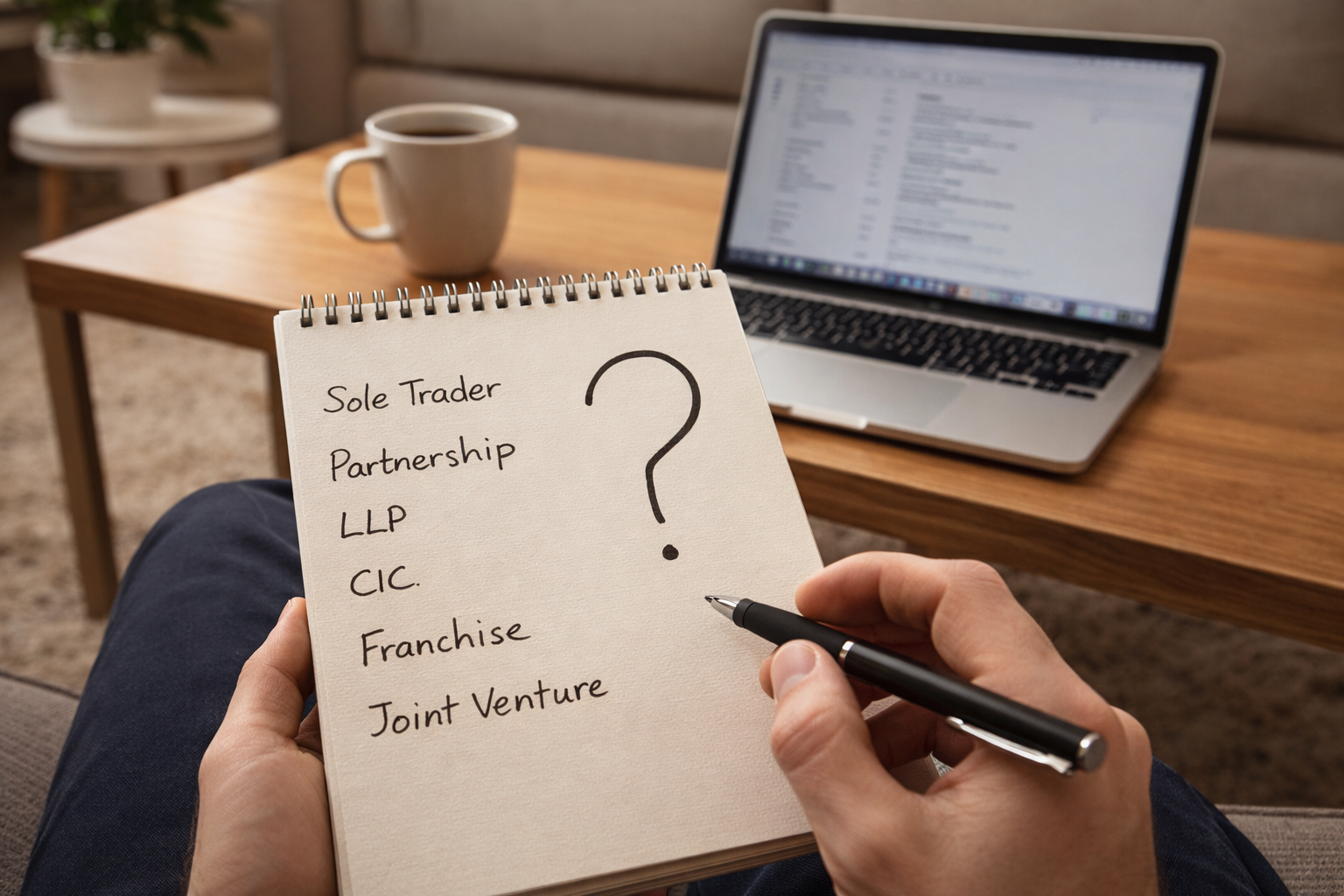
You can change the structure while the game is running, but it costs time, taxes, and legal fees. It is better to choose wisely from day one. Here are 6 business models stripped of the jargon—just the essence of risk and reward.
1️⃣ Sole Trader (UK) / Sole Proprietorship (US) – The "All-In" Approach
This is the default setting. It is just you and your business. In the eyes of the law, there is no distinction between your personal wallet and the company register.
The Reality: It is the cheapest option to start. Zero complex accounting.
The Critical Risk: Unlimited Liability. If you lose a lawsuit or go bankrupt, creditors can seize your car, your savings, and even your house.
Best For: Freelancers, consultants, and testing low-risk ideas.
2️⃣ Partnership (General Partnership) – The Shared Risk
Two or more people join forces. They bring capital, skills, and labor. It sounds great until you understand the concept of "Joint and Several Liability."
The Reality: Easy to set up, allows for synergy between founders.
The Critical Risk: You are responsible for your partner's mistakes. If your partner takes out a business loan and flees to the Bahamas, the bank will come to you for the repayment. You are liable with your entire fortune for 100% of the company's debts, not just your "half."
Best For: Small family businesses or trusted duos who don’t need corporate shielding.
3️⃣ LLP (Limited Liability Partnership) – The Professional Shield
The gold standard in the professional services world in the UK and US. It combines the flexibility of a partnership with the safety net of a corporation.
The Reality: Partners are taxed individually, but the firm has its own legal identity.
The Critical Risk: Transparency. In the UK (via Companies House), you must disclose financial reports. Everyone can see how much the firm is making. Plus, the administrative costs are higher than a standard partnership.
Best For: Lawyers, architects, accountants, and consultancy agencies.
4️⃣ CIC (UK) / Benefit Corporation (US) – Profit with Purpose
This is not a charity. It is a business that makes money, but it has a "leash" on paying out profits to private shareholders.
The Reality: In the UK, the key mechanism is the "Asset Lock"—the company's assets are legally protected and must serve the community. You can’t just sell the assets to buy a yacht.
The Critical Risk: It is harder to attract commercial investors. Venture Capital usually avoids these structures because they cannot count on a maximum Return on Investment (ROI).
Best For: Social enterprises, educational projects, and green initiatives.
5️⃣ Franchise – The Proven System
Technically an operating model (usually run as an Ltd/LLC), but a distinct way of doing business. You buy access to a brand, know-how, and supply chain. Think Subway, 7-Eleven, or Hertz.
The Reality: You are paying to reduce the risk of failure. You get a ready-made operations manual.
The Critical Risk: Zero autonomy. You are an entrepreneur, but you are not an innovator. If headquarters changes the menu, the decor, or the pricing—you must adapt, even if it hurts your local market.
Best For: Investors with capital who prefer execution over invention.
6️⃣ Joint Venture – The Strategic Alliance
This is a targeted collaboration. Two independent companies create a third entity (or a contractual agreement) for a specific goal: entering the Chinese market, for example, or building new infrastructure.
The Reality: It allows you to "borrow" a partner's resources (like customer bases or technology) without merging the entire companies.
The Critical Risk: Culture clash and decision paralysis. If two large companies have equal shares (50/50), making a simple decision can take months.
Best For: Companies planning foreign expansion or massive infrastructure projects.
The Bottom Line
Choosing a structure is a balancing act between Security (protecting your assets) and Freedom (avoiding bureaucracy and costs).
A Sole Trader has 100% freedom and 0% security. An LLP gives security but takes away privacy. A Franchise gives a system but takes away independence.
Before you sign the papers, don't ask your accountant, "What is the cheapest to run?" Ask your lawyer: "What happens to my house if this business fails?"